
Language Titans: Ranking the World’s Most Powerful Tongues
Introduction
Ever stopped to think about the sheer power packed into something as seemingly simple as a language? We use it to order our morning coffee, negotiate million-dollar deals, and even pen poetry that moves hearts. But some languages just seem to carry more weight, more influence, more… well, more *power*. So, which languages reign supreme in today’s global arena? Let’s dive into the fascinating world of linguistic heavyweights and unpack what makes them so influential.
Forget muscles and might. The “power” of a language isn’t about its guttural sounds or complex grammar. It’s about its reach, its economic impact, its cultural influence, and its role in shaping the future. Think of it as the soft power of communication, a force that subtly shapes perceptions, builds connections, and opens doors to opportunities.
Why Should You Care About Language Power?
Okay, so why should you, sitting there with your coffee, be remotely interested in which language is “winning”? Because understanding this linguistic landscape directly impacts *you*, whether you realize it or not.
- Short-Term: Imagine you’re a budding entrepreneur with a game-changing idea. Choosing the right language to target unlocks immediate access to specific markets. Ignoring languages spoken by potential investors or customers could mean missing out on crucial funding or sales. For travelers, learning a widely spoken language can vastly improve your experiences, opening doors to deeper cultural understanding and smoother navigation in foreign lands.
- Long-Term: On a grander scale, language power influences career trajectories, international relations, and even the spread of innovation. Being proficient in a “power language” can lead to more job opportunities, higher salaries, and a seat at the table in global discussions. Entire economies and industries can rise and fall depending on which language dominates specific sectors. Think about the rise of tech and the overwhelming presence of English in the coding world.
The Contenders: A Ranking of Language Titans (No Official Order, Just a Glimpse)
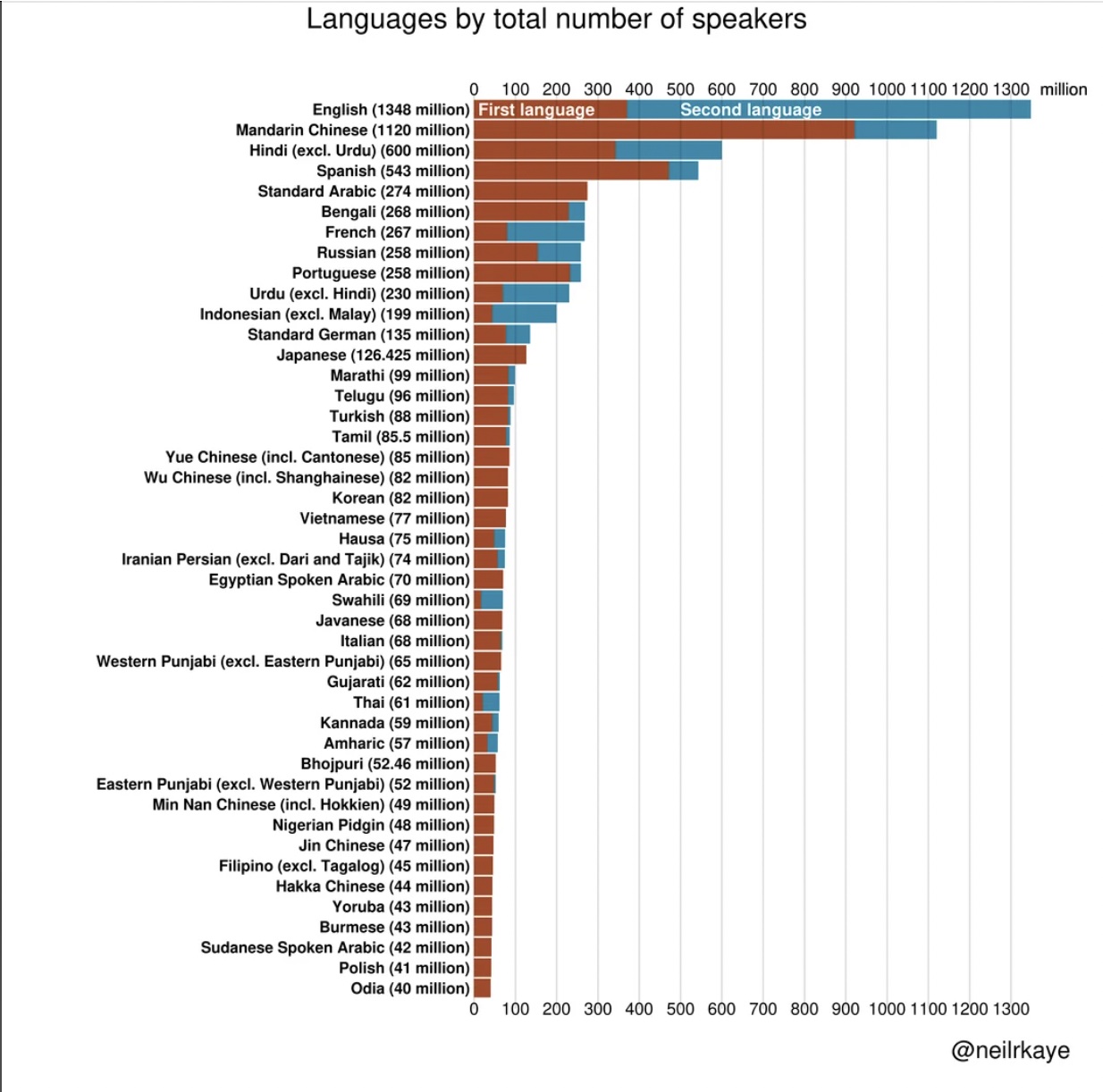
Pinpointing the absolute most powerful language is a tricky business. Different metrics can yield different results. However, a few contenders consistently rise to the top. Consider these languages as key players on the world stage, each wielding significant influence in its own right:
- English: The undisputed champion in the world of business, science, technology, and international diplomacy. English boasts a massive global presence, thanks to historical colonization, the dominance of American culture, and its role as the lingua franca of the internet. Think of any major scientific breakthrough, groundbreaking software, or international treaty – chances are, English plays a central role.
- Mandarin Chinese: With over a billion native speakers and China’s booming economy, Mandarin’s influence is rapidly expanding. Its importance in global trade, manufacturing, and technology is undeniable. For anyone looking to tap into the Asian market or understand the future of global economics, Mandarin is an essential tool.
- Spanish: Spoken across Latin America and in Spain, Spanish enjoys a significant geographical reach and a vibrant cultural influence. Its growing presence in the United States further solidifies its position as a powerful language, particularly in fields like healthcare, education, and entertainment.
- Hindi: As one of the official languages of India, a country with a massive population and a rapidly developing economy, Hindi’s importance is steadily increasing. Its cultural influence, particularly in the entertainment industry (Bollywood!), is also significant.
- Arabic: Spoken across the Middle East and North Africa, Arabic holds considerable sway in the oil industry, international finance, and Islamic culture. Understanding Arabic unlocks a deeper understanding of a region with immense geopolitical significance.
So, What Can You Do? Unleashing Your Inner Polyglot
Okay, so you’re not suddenly going to become fluent in five languages overnight. But understanding the power dynamics of language gives you actionable insights. Here are some practical steps you can take:
- Identify Your Goals: What do *you* want to achieve? Are you looking to expand your business internationally? Advance your career in a specific industry? Connect with a particular culture? Your goals will dictate which language(s) are most beneficial to learn.
- Start Small, Stay Consistent: Learning a language is a marathon, not a sprint. Set realistic goals, like learning a few new words or phrases each day. Consistency is key. Use language learning apps like Duolingo or Babbel to make the process fun and engaging.
- Immerse Yourself: Surround yourself with the language you’re learning. Watch movies and TV shows with subtitles, listen to music, read books, and try to find opportunities to speak with native speakers.
- Consider Specialized Language Skills: Don’t just focus on general language proficiency. Think about the specific vocabulary and communication styles relevant to your field. For example, if you’re in the medical field, learning medical terminology in Spanish can be incredibly valuable.
- Embrace Technology: Leverage technology to your advantage. Use translation tools, language learning apps, and online resources to supplement your learning.
Examples in Action:
- The Entrepreneurial Advantage: A small business owner in the US recognized the growing Hispanic population in their area. By learning basic Spanish and translating their marketing materials, they were able to attract a new customer base and significantly increase their revenue.
- The Career Boost: A software engineer fluent in Mandarin landed a coveted position at a leading tech company with a significant presence in China. Their language skills gave them a competitive edge and opened doors to exciting international opportunities.
Alternative Approaches:
- Partial Immersion: If full language immersion is not possible, consider attending language meetups or joining online language exchange communities.
- Hybrid Learning: Combine online courses with private tutoring for a personalized learning experience.
- Focus on Specific Skills: Instead of aiming for complete fluency, focus on learning the language skills you need for a specific purpose, such as business negotiations or travel.
The Power is in Your Hands (or Rather, Your Tongue!)
The world of languages is constantly evolving. New languages are emerging, existing languages are adapting, and the balance of power is shifting. By understanding these dynamics, you can strategically equip yourself with the linguistic tools you need to navigate this complex landscape and achieve your goals.
Learning a new language is not just about acquiring new words and grammar rules; it’s about opening your mind to new cultures, new perspectives, and new opportunities. It’s about empowering yourself to connect with the world in a more meaningful and impactful way. So, take the leap, embrace the challenge, and unlock the power that lies within a new language. The world awaits!