
GLOBAL TONGUES: The Unrivaled Reign of the World’s Most Spoken Languages
Introduction
Ever stopped to think about the sheer power of language? It’s more than just a way to order a coffee or ask for directions. It’s the bridge connecting cultures, the engine driving economies, and the very foundation upon which we build relationships. And when we talk about the world’s most spoken languages, we’re talking about languages that literally shape the globe. But what does their dominance really mean, both now and for the future? Let’s dive in.
The Titans of Talk: A Linguistic Landscape
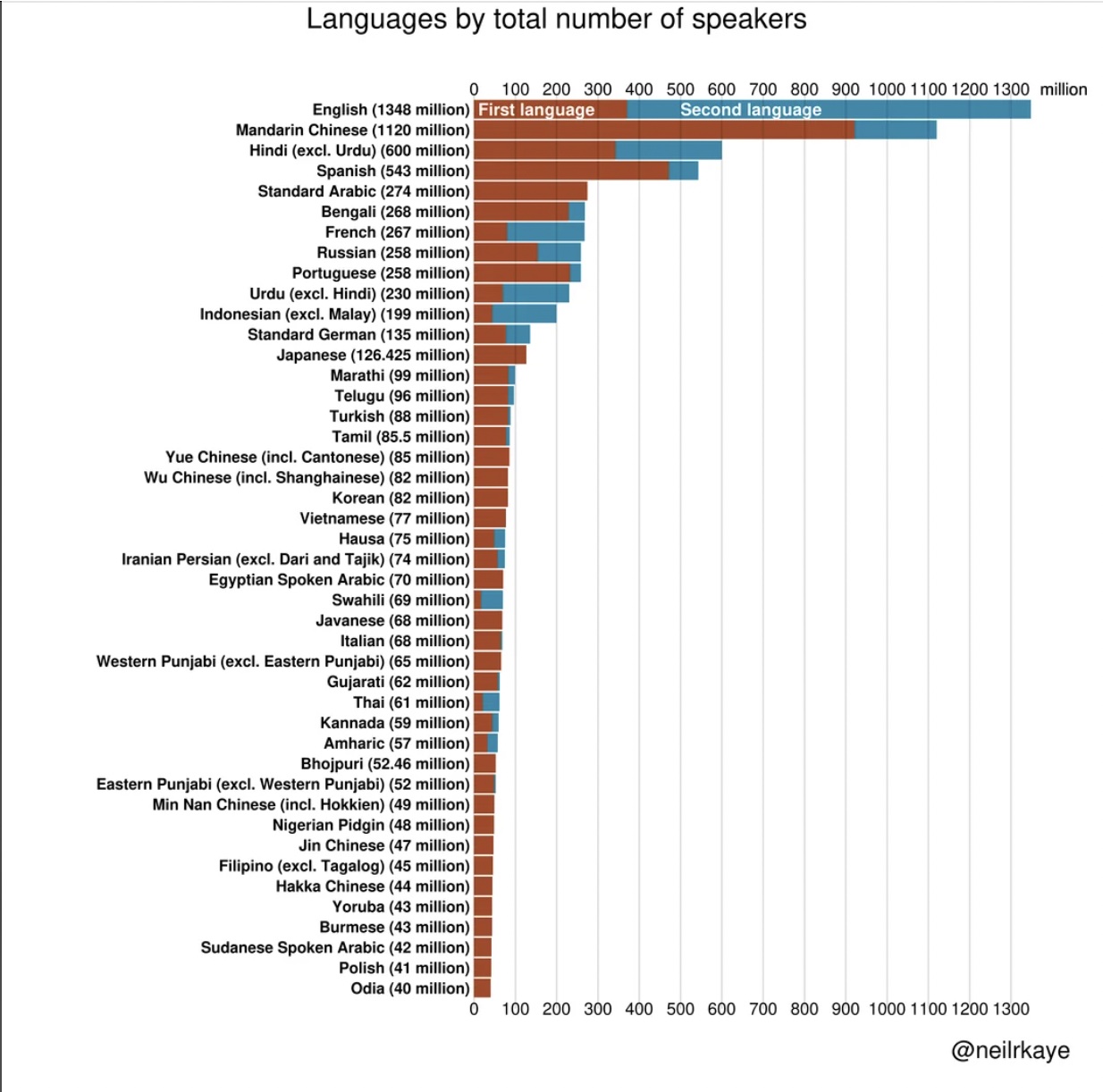
We’re all familiar with the big players. Mandarin Chinese, with its staggering 1.1 billion native speakers, sits comfortably at the top. English, the lingua franca of business and the internet, follows closely behind with over 1.4 billion speakers including non-native. Spanish, with its vibrant cultural heritage and widespread presence in the Americas, boasts over 500 million speakers. Then there are Hindi, Arabic, Bengali, Portuguese, Russian, and Urdu, each commanding a massive and influential global audience.
These languages aren’t just spoken in isolated pockets; they’re the lifeblood of major economies, influential political spheres, and diverse cultural landscapes. But their dominance creates a complex web of opportunities and challenges.
Short-Term Buzz: Opportunities and Challenges Today
In the short term, the dominance of these global tongues offers undeniable benefits. For businesses, it unlocks access to vast markets. Knowing Spanish, for instance, opens doors to Latin America, a region with burgeoning economies and a growing consumer base. English proficiency is practically a prerequisite for navigating the international business world.
However, this linguistic hierarchy also presents challenges. It can create barriers for individuals whose native languages are less widely spoken. Think about the talented entrepreneur from a small, linguistically diverse country who struggles to access funding or international markets because they lack fluency in a dominant language. This can lead to economic disparities and limit opportunities for global participation.
Moreover, a reliance on a few key languages can lead to a homogenization of culture. While cultural exchange is undoubtedly a good thing, it’s crucial to preserve the richness and diversity of smaller languages. When local dialects and traditions are overshadowed by global languages, we risk losing invaluable cultural heritage.
Long-Term Echoes: The Future of Language and Influence
Looking ahead, the impact of these dominant languages becomes even more profound. Imagine a future where AI-powered translation tools are readily available. Will this level the playing field, allowing anyone to communicate effortlessly in any language? Perhaps, but it could also further solidify the dominance of major languages. If translation becomes seamless, why bother learning a less common language?
This could lead to a decline in linguistic diversity, with smaller languages slowly fading into obscurity. Think about the indigenous languages already at risk of extinction due to the pressures of globalization and the dominance of major languages. The loss of a language is the loss of a unique way of seeing the world, a repository of knowledge, history, and cultural identity.
Furthermore, the dominance of certain languages shapes the flow of information and the narrative of global events. News and information are often disseminated primarily in major languages, potentially leading to biases and a skewed understanding of events in non-English or non-Spanish speaking regions.
Bridging the Gap: Practical Solutions for a Multilingual World
So, how do we navigate this linguistic landscape and ensure a more equitable and vibrant multilingual future? The answer lies in a multi-pronged approach:
- Embrace Multilingualism in Education: Instead of focusing solely on learning a dominant language, encourage the study of multiple languages from a young age. Studies have shown that early exposure to multiple languages enhances cognitive abilities and promotes cultural understanding.
Example: The European Union’s “Mother Tongue + Two” policy encourages all citizens to learn at least two languages in addition to their native tongue. This initiative promotes linguistic diversity and strengthens cross-cultural communication.
- Invest in Language Technology for ALL Languages: While AI-powered translation tools are advancing rapidly, it’s crucial to ensure that they support a wide range of languages, not just the most common ones. This requires investment in developing datasets and algorithms for less-resourced languages.
Example: Organizations like Translators without Borders use technology and volunteer translators to provide humanitarian aid in underserved communities around the world, breaking down language barriers and facilitating access to crucial information.
- Support and Promote Indigenous Languages: Implement policies that protect and revitalize indigenous languages, such as language immersion programs, community-based language initiatives, and the integration of indigenous languages into educational curricula.
Example: The Māori Language Act in New Zealand has helped to revitalize the Māori language through government support, educational programs, and the establishment of Māori-language media.
- Promote Linguistic Diversity in the Workplace: Encourage businesses to value multilingualism and create inclusive work environments that accommodate employees from diverse linguistic backgrounds. This could involve offering language training, providing translation services, and recognizing the value of employees who can communicate with customers and partners in multiple languages.
Example: Companies like Airbnb recognize the value of multilingualism and actively recruit employees with language skills to provide better customer service and expand their global reach.
- Leverage Technology for Language Learning: Make use of the numerous online resources and apps available for language learning. Platforms like Duolingo, Babbel, and Memrise offer gamified and accessible ways to learn new languages, making it easier for individuals to expand their linguistic horizons.
Case Study: Duolingo’s success lies in its accessibility and gamified approach. Millions of users worldwide are learning languages through this platform, often starting with a free account. This democratizes language learning and empowers individuals to acquire new skills regardless of their socioeconomic background.
Alternative Approaches:
- Micro-Language Initiatives: Support smaller-scale community projects focused on preserving and promoting unique dialects or less widely spoken languages. These initiatives can foster a sense of local identity and cultural pride.
- Open-Source Language Resources: Encourage the development and sharing of open-source language learning materials and translation tools. This can make language learning more accessible and promote collaboration among language enthusiasts and researchers.
A Future of Linguistic Harmony
The dominance of certain languages is a reality, but it doesn’t have to lead to a linguistic monoculture. By embracing multilingualism, investing in language technology for all, supporting indigenous languages, and promoting linguistic diversity in all spheres of life, we can create a world where all languages are valued and respected.
The future of language is not about choosing between global dominance and local preservation; it’s about finding a balance that allows us to connect with the world while celebrating our unique cultural identities. It’s a future where multilingualism is not just a skill, but a way of life, enriching our lives, broadening our perspectives, and building a more inclusive and interconnected world. The power to shape this future lies in our hands. Let’s choose to speak up, learn, and connect in a multitude of tongues.