
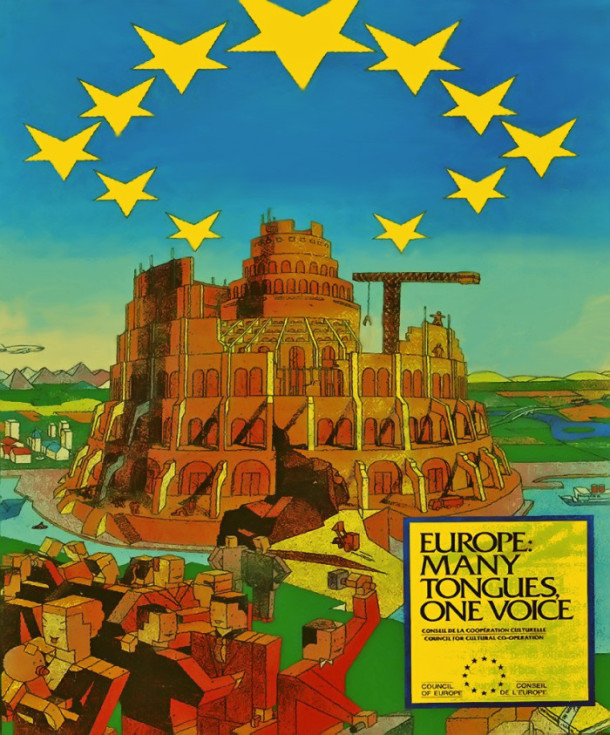
Europe’s Tongue Twister: Unity in Babel
Introduction
Ever tried ordering a coffee in a Parisian café with your high school French? Or navigating the intricate bus system of Berlin armed with only a phrasebook? If so, you’ve experienced a tiny slice of the linguistic labyrinth that is Europe. A continent brimming with history, culture, and, yes, a dazzling array of languages. This linguistic diversity, while undeniably a cultural treasure, also presents a unique set of challenges to the ideal of a unified Europe. It’s a veritable tongue twister, this quest for unity in Babel.
But let’s be honest, the idea of Europe as a multilingual paradise sounds romantic on paper. In reality, the language barrier impacts everything from business negotiations to political discourse, from accessing vital information to simply understanding your neighbour. The question is: how do we navigate this complex linguistic landscape and forge a more truly unified Europe?
The Short-Term Stumble: Everyday Impacts
The immediate effects of Europe’s linguistic diversity are felt on a daily basis. Think about the small business owner in Italy trying to expand her market to Germany. She needs to translate her website, marketing materials, and potentially hire multilingual staff. This adds significant cost and complexity to the process.
For citizens, navigating government services can be equally frustrating. Imagine a Polish immigrant trying to understand the healthcare system in the UK. The language barrier can lead to misunderstandings, delays in receiving care, and feelings of isolation.
Even within the European Union institutions, communication can be a cumbersome process. Translating documents and providing interpretation services for meetings are expensive and time-consuming. While necessary for democratic participation, these processes inevitably slow down decision-making.
The Long-Term Echo: A Fading Symphony?
The long-term implications are even more profound. A persistent language barrier can hinder economic growth, limit social mobility, and even fuel nationalistic sentiment.
Consider the impact on the workforce. Individuals who are fluent in multiple languages have a clear advantage in the job market, leading to disparities and potentially exacerbating existing inequalities. A lack of language skills can prevent talented individuals from fully participating in the European economy, leading to a brain drain and hindering innovation.
Furthermore, the language barrier can impede the free flow of information and ideas. If citizens are unable to access news and information from other European countries, they may be less likely to understand and appreciate different perspectives. This can contribute to a sense of division and undermine the foundation of European unity.
In essence, if we fail to address the challenges posed by linguistic diversity, we risk creating a fragmented Europe where economic opportunities, social cohesion, and political understanding are limited by linguistic boundaries.
Untangling the Tongue: Practical Solutions
So, how do we tackle this multifaceted challenge? Fortunately, there’s no single, silver bullet solution. Instead, a multi-pronged approach is needed, focusing on education, technology, and a healthy dose of pragmatism.
- Embracing Multilingualism in Education:
This starts young. Investing in early language learning programs can equip future generations with the skills they need to thrive in a multilingual Europe. Imagine a scenario where children across Europe begin learning a second language, such as English or French, from primary school onwards. This would not only improve their language skills but also foster a greater understanding and appreciation of other cultures.
For example, the CLIL (Content and Language Integrated Learning) approach, where subjects like science or history are taught in a foreign language, has shown promising results in improving both language proficiency and subject knowledge. Countries like the Netherlands and Sweden have successfully implemented CLIL programs, demonstrating the feasibility of this approach.
- Harnessing the Power of Technology:
Technology offers a powerful tool for bridging the language gap. Machine translation has made significant strides in recent years, providing increasingly accurate and accessible translations. From translating websites and documents to facilitating real-time conversations, technology can help break down communication barriers.
Take, for example, the use of real-time translation apps at international conferences. Delegates can listen to presentations in their native language, making the event more accessible and inclusive. Similarly, AI-powered translation tools can help businesses communicate with customers and partners in different languages, expanding their reach and fostering international collaboration.
- Promoting “Lingua Franca” Pragmatism:
While celebrating linguistic diversity is essential, we also need to be pragmatic about facilitating communication. The widespread adoption of a lingua franca, a common language used for communication between speakers of different languages, can significantly streamline communication in certain contexts.
English has emerged as the de facto lingua franca for business, science, and international relations. While not without its critics, English proficiency offers undeniable advantages in these domains. Encouraging widespread English language learning, while simultaneously promoting the learning of other European languages, can help strike a balance between pragmatism and cultural preservation.
- Fostering Cultural Exchange and Understanding:
Ultimately, breaking down the language barrier requires more than just technical solutions. It also necessitates fostering cultural exchange and understanding. Programs like Erasmus+, which allows students to study abroad, can play a crucial role in promoting intercultural dialogue and breaking down stereotypes.
Furthermore, initiatives that promote cultural exchange, such as film festivals, literature translations, and art exhibitions, can help foster a greater appreciation of different European cultures. By engaging with each other’s cultures, we can begin to understand each other better and overcome the barriers that language can create.
- Investing in Interpreter and Translator Training:
While technology helps, human expertise remains crucial. There’s a constant need for qualified interpreters and translators, especially in specialized fields like law, medicine, and technology. Investing in training programs and supporting the profession ensures accurate and nuanced communication in critical situations.
Alternative Approaches: Tailoring Solutions to Specific Needs
The best approach will vary depending on the specific context. Here are a few alternative approaches to consider:
- Regional Language Promotion: Focusing on promoting the use of regional languages, such as Basque or Catalan, can help preserve cultural identity and promote local economic development.
- Subtitling and Dubbing Initiatives: Investing in high-quality subtitling and dubbing of films and television shows can make content more accessible to a wider audience and promote language learning.
- Language Learning Apps and Online Resources: Leveraging the power of technology to provide accessible and affordable language learning resources can empower individuals to learn new languages at their own pace.
The key is to tailor solutions to the specific needs and context, recognizing that there is no one-size-fits-all approach.
The Symphony of Unity: A Harmonious Future
The challenge of linguistic diversity in Europe is undeniable, but it is also an opportunity. By embracing multilingualism in education, harnessing the power of technology, promoting pragmatic lingua franca use, fostering cultural exchange, and investing in human expertise, we can begin to untangle this tongue twister and forge a more truly unified Europe.
It’s a journey, not a destination. There will be stumbles and setbacks along the way. But with a commitment to collaboration, innovation, and a genuine desire to understand each other, we can create a Europe where linguistic diversity is not a barrier to unity but a source of strength.
Don’t be intimidated by the sheer number of languages. Start small. Learn a few basic phrases in a new language. Watch a foreign film with subtitles. Engage in a conversation with someone from another country. Every small step counts.
Imagine a future where Europeans can effortlessly communicate with each other, where economic opportunities are accessible to all, regardless of their language skills, and where a shared understanding of different cultures fosters a deeper sense of unity. This is the vision we must strive for, and it is a vision within our reach.
Let’s turn Europe’s tongue twister into a harmonious symphony, a testament to the power of diversity and the enduring spirit of unity. The future of Europe depends on it.